
Patrik Laine was once a 40-goal scorer. Should The Maple Leafs try to get him back to young NHL star he once was? David Alter investigates.
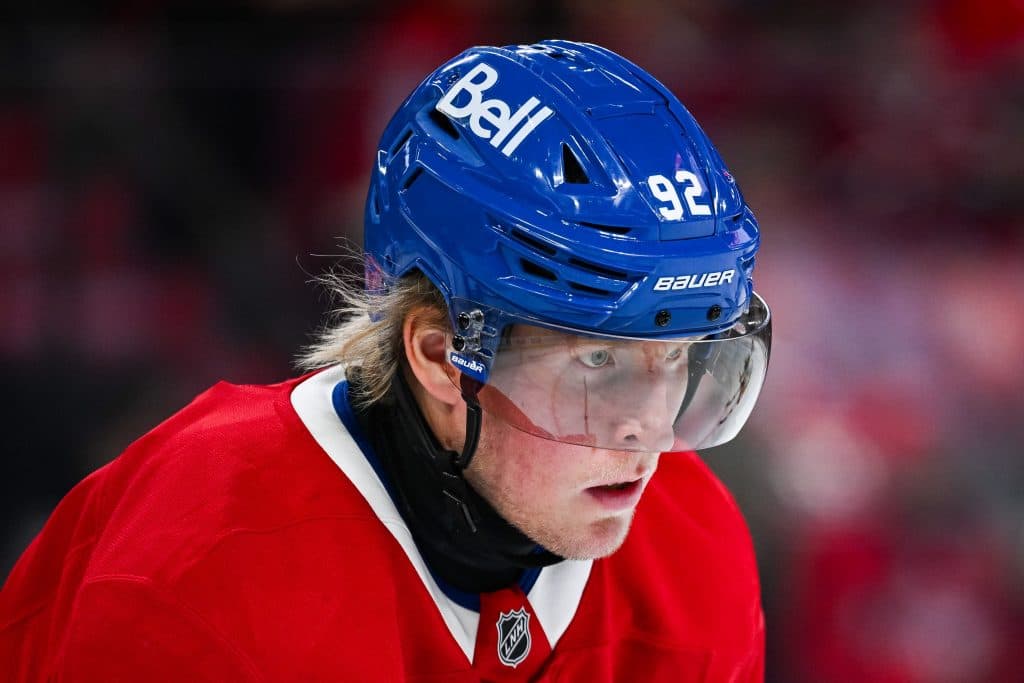
Patrik Laine remains one of the more intriguing unsigned unrestricted free agents as training camps draw closer. The 28-year-old Finnish winger, who has been linked to the Toronto Maple Leafs among a handful of other clubs, presents a classic calculated risk for a team still looking to add secondary scoring without locking itself into a burdensome long-term commitment.
According to a report from the Montreal Gazette’s Herb Zurkowsky, Laine has drawn interest from the New York Rangers, Minnesota Wild, Tampa Bay Lightning, Philadelphia Flyers and the Maple Leafs since free agency opened July 1. The market has been quiet for a player who once routinely threatened 40 goals, and that silence has only heightened the discussion around whether a short-term, performance-bonus-heavy deal could work for both sides.
Laine’s resume still carries weight. He has 224 goals and 422 points in 537 career games. He scored 30 or more goals in each of his first three NHL seasons and has reached the 20-goal mark in four other campaigns. His one-timer remains one of the heavier and more accurate shots in the league, a weapon that produced 15 of his 20 goals on the power play during a productive 2024-25 season with Montreal. Size is another asset: the 6-foot-4, 208-pound right shot brings a physical presence that few pure finishers can match.
The problem is durability and consistency. Laine played just five games last season before a core-muscle injury required surgery. He was medically cleared later in the year and practiced regularly, but never returned to the Canadiens’ lineup.
Over the past three seasons he has appeared in only 75 of a possible 246 games. Those lengthy stints on injured reserve make him eligible for a one-year contract loaded with performance bonuses, the same structure typically reserved for entry-level players or veterans 35 and older.
A modest base salary, potentially in the range of $1 million or slightly higher, paired with bonuses tied to games played, goals or points would keep the guaranteed money low. Any bonuses that exceed a certain threshold relative to the salary-cap ceiling would not fully count against the current year’s cap, further limiting the financial exposure.
For the Maple Leafs under general manager John Chayka, that structure is the entire appeal. Toronto does not need to commit significant long-term money or years to a player whose skating and defensive game have been questioned throughout his career. Laine owns a career minus-75 rating and has never been mistaken for a two-way force. New head coach Jim Hiller’s systems are built around structure and defensive responsibility, which could either help Laine improve in those areas or expose the gap if he cannot adapt.
Yet the potential upside is clear: a right-handed shot who can slot into the top six or, at minimum, the second power-play unit and provide a different look alongside captain Auston Matthews. The two were selected first and second overall in the 2016 draft; pairing them, even on a limited basis, would create an intriguing offensive combination.
There are organizational reasons why Toronto could be more attractive to Laine than some of the other clubs linked to him. The recent hiring of Andy O’Brien as vice president of sport science gives the Leafs a high-level resource focused on injury rehabilitation, strength, conditioning, nutrition and mental performance. For a player whose body has broken down repeatedly, access to that infrastructure matters.
Associate coach Daniel Alfredsson, a former star winger with European roots, could also serve as a useful bridge for a scorer trying to rediscover the version of himself who once projected 30-to-40-goal seasons.
None of this erases the risks. Laine’s skating has never fully recovered from earlier knee issues, and questions linger about his motivation after a lost season and a quiet free-agency period. Clubs are understandably cautious about committing without clearer assurances on health and commitment. Leafs fans have already voiced skepticism on social media, with some viewing any interest as a hard pass regardless of the contract length.
Still, the math of a low-risk deal is hard to ignore. Toronto can offer opportunity, specialized support staff and a chance to play with elite talent without mortgaging future cap space. If Laine stays healthy and produces at even a fraction of his previous peak, the Leafs gain a high-end finisher at a bargain rate. If the injuries resurface or the two-way game remains a liability, the organization can walk away after one season with minimal damage.
As August progresses and the calendar tightens toward camp, Laine’s situation will continue to draw attention. For the Maple Leafs, the question is no longer whether the talent is still there. It is whether the price, both in dollars and in organizational bandwidth, makes the calculated swing worthwhile. On paper, the low-risk structure suggests it is at least worth exploring.