
If the Vegas Golden Knights can play by their own rules, then so can Bruce Cassidy. That’s the view of David Alter, as he explains below.
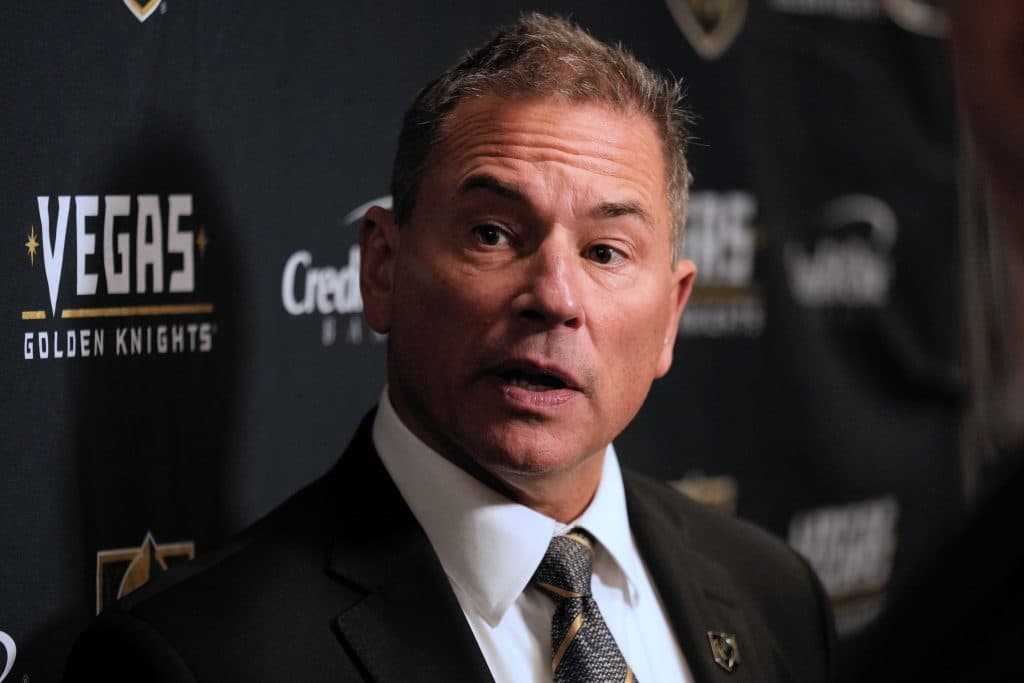
In the high-stakes world of NHL coaching, loyalty cuts both ways – or at least it should. Bruce Cassidy, the former head coach of the Vegas Golden Knights, is making noise about his current limbo, and frankly, he’s right to do so. Fired with just eight games remaining in the regular season despite securing a playoff spot, Cassidy now finds himself in the awkward position of being paid through next season while being blocked from pursuing new opportunities.
Appearing on the Spittin’ Chiclets podcast, Cassidy didn’t mince words:
“It’s upsetting. I’m going to be honest because once you’re fired, your contract is basically terminated… But the one thing people don’t realize [is] I can’t resign today and go work for someone tomorrow. I can’t work until Vegas gives me permission until this contract is up.” He added that two teams had reached out – now public knowledge as the Edmonton Oilers and Los Angeles Kings – and he simply wants “to go to work. I’m a hockey coach.”
Those are the words of a man who has proven himself as a Stanley Cup champion coach with a track record of success in Boston and Vegas. It’s hard not to empathize. While the Golden Knights are within their legal rights under NHL bylaws and the collective bargaining agreement to withhold permission, it raises eyebrows around the league about the ethics at play. Vegas has always marched to the beat of its own drum, from their aggressive expansion approach to bold personnel moves, but this feels unnecessarily punitive.
Golden Knights GM Kelly McCrimmon addressed the situation on OverDrive, maintaining a consistent organizational line:
“Teams have asked for permission to speak with Bruce. We’ve been consistent that our focus currently is on the Stanley Cup Playoffs and the teams have respected that. I’ve spoken with Bruce. He understands this as well.”
Fair enough from a competitive standpoint while Vegas pushes deep into the playoffs under new bench boss John Tortorella. But it also conveniently sidesteps the reality that they chose to move on from Cassidy mid-season. Paying a coach not to coach while preventing him from interviewing elsewhere creates a strange power dynamic that doesn’t sit right with many observers.
This is where Cassidy’s media rounds become strategic. Vegas likely hoped the situation would remain quiet, handled behind closed doors. Instead, by voicing his frustrations publicly, Cassidy has turned the tables. What’s Vegas going to do – terminate his contract and stop the payments? Unlikely. Coaches in this position are usually advised to stay silent and collect the cheque, but Cassidy is betting on himself. With the Oilers and Kings showing interest, and presumably the Toronto Maple Leafs eyeing a strong, experienced voice as well, he holds cards worth playing.
By speaking out, Cassidy forces the conversation. It’s a distraction Vegas created for themselves by not granting a clean release or timely permissions. Organizations can operate ruthlessly – that’s their prerogative in a cutthroat league – but coaches don’t have to sit idly by. Cassidy’s willingness to push back demonstrates confidence and agency.
At the end of the day, this saga highlights a quirk in NHL rules that probably needs revisiting. Fired coaches shouldn’t be left in purgatory while their former teams dictate their futures indefinitely. If I were him, I’d continue to be my own advocate making the media rounds, ensuring the problem won’t go away until the Golden Knights play ball.
A team like the Maple Leafs would like to talk to him. He may not be their first choice, nor him, either. But we should at least get to find out.